一直以來,也希望找機會,嘗試一下以 Digital Streaming 傳輸 Audio Files
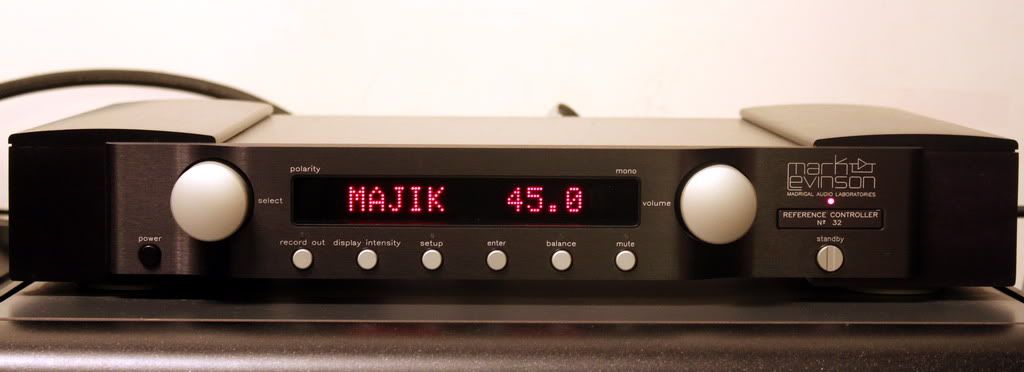
用 Mark Levinson No.30.6 作解碼的播放效果

終於有空閒時間,可進行此項比較,感受其性能
多謝熱心 Linn 用家朋友,慷慨借出手上 Majik DS 給我作系統嘗試



正在瀏覽這個版面的使用者: Google [Bot] 和 25 位訪客
 發表人 Raymond Wan 發表於 2011-02-02, 12:48



發表人 wagonr96 發表於 2011-02-02, 12:49


 燒鵝脾la pokguy

 一日不抽水 一日不吃飯

發表人 W0S0L00 發表於 2011-02-02, 12:50
Raymond Wan 寫:
一直以來,也希望找機會,嘗試一下以 Digital Streaming 傳輸 Audio Files
用 Mark Levinson No.30.6 作解碼的播放效果
終於有空閒時間,可進行此項比較,感受其性能
多謝熱心 Linn 用家朋友,慷慨借出手上 Majik DS 給我作系統嘗試


發表人 Raymond Wan 發表於 2011-02-02, 12:53


發表人 Raymond Wan 發表於 2011-02-02, 12:56

發表人 Raymond Wan 發表於 2011-02-02, 13:03


發表人 Raymond Wan 發表於 2011-02-02, 13:14


發表人 r32 發表於 2011-02-02, 13:43

發表人 Raymond Wan 發表於 2011-02-02, 13:47


Linn - Murrays 寫:The 'fixed' setting was originally included to deal with low sample rate (sub 32kHz) streams such as internet radio. Most SPDIF receivers cant lock on to such low sample rates, so it is useful to be able to upsample to a more commonly supported rate. It was not really envisaged that many customers would use this feature to downsample a higher sample rate stream. For this reason, the conversion from 192k to 96k in 'fixed' mode is done by crude decimation. Decimation (as opposed to downsampling) has the effect of aliasing high frequency components down into the audio band. Unfortunately, most 192k tracks have significant levels of noise above 96k (a side-effect of noise-shaping ADC's) which gets folded back into the audio band by the decimation process. This is almost certainly the noise you are hearing. We intend to improve the 192k downsampling process to fix this issue, but at the moment it would be better to either use the 'raw' setting (if your DAC can handle 192k), or alternatively use a software downsampler to do an offline conversion to 96k.

發表人 Raymond Wan 發表於 2011-02-02, 13:57



發表人 brian_av100 發表於 2011-02-02, 14:03



發表人 motobee 發表於 2011-02-02, 14:28